


Find Your Peace Through Painting Anytime Anywhere
Some days, the quiet does not arrive on its own. You have to make a small place for it.
Maybe school is starting soon, and the house already feels full of lists, schedules, backpacks, lunch plans, and early alarms. Maybe work has been loud. Maybe family life has been sweet but nonstop. Maybe nothing is wrong at all, yet your mind keeps asking for a softer hour.
Painting can become that hour.
You do not need a perfect studio, expensive supplies, or a plan that looks impressive. You only need a surface, a little color, and permission to begin badly if that is how the day begins. A canvas on the porch, a sketchbook at the kitchen table, a small paint set under a tree, or a few brushes packed for a weekend away can be enough.
The goal is not to create something flawless. The goal is to slow your breathing, notice what is in front of you, and let your hands do something gentle.
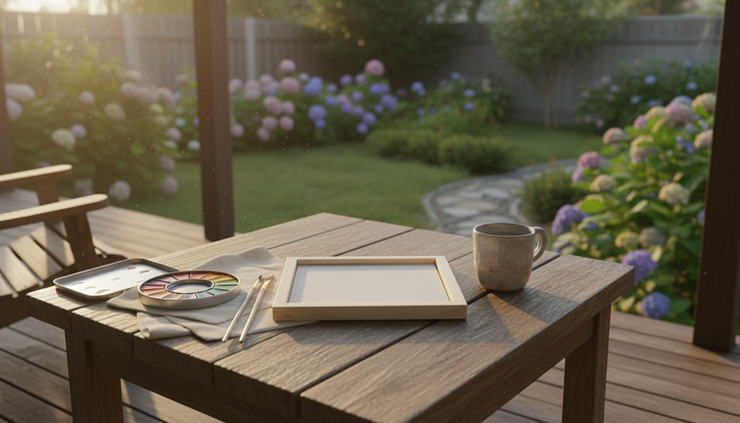
Painting can make ordinary moments feel quieter
A blank canvas can feel intimidating at first. It seems to ask for a finished idea before you have even dipped the brush in water. That pressure is easy to carry into everything, especially during busy seasons.
But painting does not have to begin with a masterpiece in mind. It can begin with one color.
A pale blue wash. A row of yellow dots. A loose green shape that might become a leaf. A soft pink circle. A background with no subject at all.
That first mark breaks the spell. It reminds you that you are allowed to try. You are allowed to make something just because making feels good.
Painting helps because it gives the mind a simple place to land. Instead of spinning through tomorrow’s tasks, you notice small things:
How the brush drags when the paint is dry
How color changes when you add more water
How a flower is not one color, but many
How your shoulders drop when you stop rushing
How silence can feel different when your hands are busy
This is why painting can work so well as a quiet-time ritual. It does not demand that you escape your life. It gives you a softer way to return to it.
If you are gearing up for the school year, painting can help create a boundary between preparation and rest. After labeling supplies, checking calendars, and planning routines, sit with your paints for 20 minutes. Let your hands move in a way that has nothing to do with productivity.
If you simply need a break from noise, do the same. Put your phone across the room. Set out a few colors. Paint without explaining it to anyone.
Peace often starts with one small choice to stop performing.
You can paint almost anywhere with a simple kit
One of the kindest things about painting is how portable it can be. You do not need to wait for the ideal room, the ideal table, or the ideal mood. A small kit can follow you around and turn everyday places into creative spaces.
You might paint:
At the kitchen table before the day begins
In the backyard while kids or pets play nearby
On a balcony with a cup of coffee
At a park picnic table
In a quiet corner of a classroom after setup day
Beside a window during lunch
On a blanket in the shade
In a hotel room while traveling
At a family gathering when you need a calm pause
A portable painting kit does not need much. In fact, fewer supplies can make the process feel easier.
What to pack for a peaceful painting session
Start with basics you can carry in one tote or basket.
A small canvas, canvas board, or mixed-media sketchbook
A travel watercolor set, acrylic paints, or gouache
Two or three brushes in different sizes
A pencil for light outlines
A small jar or bottle for water
A cloth or paper towel
Painter’s tape if you like clean edges
A plastic bag for damp supplies
A small apron or old shirt if spills bother you
If you use acrylic paint, add a paper plate or reusable palette. If you use watercolor, bring a few extra sheets of paper so you can test colors before placing them on your main piece.
You can also keep a tiny “peace kit” ready near the door. That way, when time opens up, you do not spend half of it hunting for supplies.

Choose spaces that help you soften
The right painting spot does not have to be silent. It should feel safe, comfortable, and easy to settle into.
Look for:
A flat surface or lap board
Good natural light
A place where spills are not a disaster
A little distance from high-traffic areas
A view that gives your eyes somewhere gentle to rest
A garden, porch, or backyard can be especially calming because nature gives you ready-made subjects. Flowers, leaves, clouds, pebbles, birds, shadows, and grass are all simple places to begin. If you like painting outdoors, canvas art gardenflowers peaceful painting quiet time self care can become more than a phrase. It can become a personal routine that reminds you to pause and notice what is blooming around you.
If the weather is not kind, bring the outside in. Put a few cut flowers in a jar. Place a leaf on the table. Open a window. Use a photo you took on a walk.
The place matters, but not as much as the feeling you allow yourself to have there.
Let go of perfect before the brush touches the canvas
Perfection can ruin a peaceful activity before it starts.
It whispers that you need better supplies. It says you should watch more tutorials. It tells you not to waste the canvas. It makes every brushstroke feel like a test.
But the canvas is not judging you. The paper is not keeping score. Paint is allowed to be messy.
A peaceful painting practice needs a different set of rules.
The first rule is that the painting does not need to be good to be worthwhile.
That may sound simple, but it changes everything. Once the goal shifts from impressing to noticing, your body can relax. You can paint a crooked flower and still enjoy the color. You can cover a section that feels wrong. You can turn mistakes into texture.
Try these gentle ways to loosen up:
Paint with your non-dominant hand for five minutes
Use only one color and make different shades
Fill a page with circles, lines, or leaf shapes
Paint the same flower three times without fixing it
Set a timer for 10 minutes and stop when it rings
Use an old brush so you are not precious with it
These exercises remove the pressure of making “real art.” They help you remember that painting can be play.
Make room for ugly first layers
Many paintings go through an awkward stage. The colors look flat. The shapes seem strange. The background feels too empty or too busy.
That stage does not mean you failed. It means the painting is still becoming.
A first layer is often just information. It shows you where more depth might go, where the light needs to shift, or where a shape can soften. A messy beginning gives you something to respond to.
If a painting starts to frustrate you, pause before deciding it is ruined. Step back. Drink some water. Look at it from across the room. Turn it upside down. Ask one simple question.
What would make this feel a little calmer?
Maybe the answer is more white space. Maybe it is a softer color. Maybe it is covering an area completely and starting again. Maybe it is leaving the painting alone until tomorrow.
Peaceful painting includes patience with the process.
Try simple painting ideas when you do not know what to make
One of the biggest barriers to painting is not a lack of talent. It is the question, “What should I paint?”
When you are tired, too many choices can make rest feel like work. Keep a short list of simple ideas nearby so you can begin without overthinking.
Paint what is close
Look around and choose one ordinary thing.
A mug. A candle. A plant. A worn book. A pair of sneakers by the door. A bowl of oranges. A backpack waiting for the first day of school.
Ordinary objects are wonderful subjects because they already belong to your life. You do not have to search far for meaning. Paint the thing as it feels, not as a camera would capture it.
A coffee mug might become warm brown curves and pale steam. A backpack might become blocks of color and soft shadows. A plant might become loose green strokes instead of detailed leaves.
Paint the weather
Weather is a peaceful subject because it can stay abstract.
Try painting:
A gray rainy morning
A golden summer evening
A pale winter sky
A windy day in blue and green strokes
A sunset using only three colors
You do not have to paint clouds perfectly. Let the paint move. Let edges blur. Let the sky be more about mood than accuracy.

Paint a feeling with color
Some days, painting an object feels like too much. On those days, paint a feeling.
Choose colors that match your mood or the mood you want to move toward.
For calm, try soft blue, cream, sage green, lavender, or pale gray.
For comfort, try warm peach, ochre, deep green, cocoa brown, or muted rose.
For release, try bold red, navy, black, bright yellow, or orange, then soften the painting with white or water.
Paint stripes, waves, circles, blocks, or loose marks. Let the colors carry the meaning. No one else needs to understand it.
Paint a school-year reset
If the school year is approaching, create a small painting that represents ease rather than pressure.
You could paint:
A sunrise for a fresh start
A tree for steadiness
A stack of colorful books
A calm desk at home with a plant and pencil cup
A path through a garden
A simple word like “breathe,” “begin,” or “steady”
Keep it small. A 5-by-7 canvas or one sketchbook page is enough. The point is to give yourself a visual reminder that new routines can include care, not only responsibility.
Build a painting ritual that feels easy to return to
A peaceful practice works best when it fits real life. If it takes too much effort, it becomes another task on the list.
Start with a ritual so small you can keep it.
Maybe your painting time is Sunday evening after dinner. Maybe it is 15 minutes after school drop-off. Maybe it is Friday afternoon on the porch. Maybe it is once a month at the park. The rhythm can be simple.
Set up before you need it
If supplies stay packed away in a hard-to-reach place, painting becomes less likely. Keep your most-used items together.
A basket on a shelf works well. So does a small rolling cart, a tote bag, or a lidded box.
Include only what you enjoy using. If oil paint feels like too much cleanup, skip it. If watercolor feels light and easy, use that. If acrylics help you feel bold, keep them ready.
The best supplies are the ones that help you begin.
Use a soft start
Before painting, take one minute to arrive.
Place your feet on the floor. Notice your breath. Look at the colors in front of you. Choose one brush. Choose one color. Make one mark.
That is enough to start.
You can also play quiet music, light a candle, sit near a window, or take your supplies outside. Try not to make the ritual so detailed that it becomes fragile. Peace should not require perfect conditions.
Stop before you are drained
Many people paint until they feel frustrated, then remember the whole session as stressful. Try stopping while you still feel steady.
Leave a painting unfinished on purpose. Rinse your brushes. Set the canvas where you can see it. Let it wait for you.
This teaches your mind that painting is a place you can return to, not a project you must conquer in one sitting.
Painting with others can still feel peaceful
Quiet time does not always mean being alone. Painting can become a shared calm space with kids, friends, siblings, parents, or neighbors.
The key is to lower the pressure for everyone.
Set out supplies and give a loose invitation. Paint garden flowers. Paint your favorite color. Paint a place you want to visit. Paint a feeling. Then let each person work in their own way.
If children are involved, protect the peace by preparing the space. Use washable paints, old shirts, newspaper or a vinyl tablecloth, and sturdy paper. Give fewer colors at first to reduce chaos. Accept that their process may include mixing every shade into brown.
That can be part of the fun.
For back-to-school season, a family painting hour can help shift the mood. Everyone can decorate a small canvas for their room, paint bookmarks, or make a simple “calm corner” sign. This turns art into a shared reset before schedules get full.
For adults, a small painting circle can be just as restorative. No critique. No comparison. Just tea, paints, and time.

Keep the peace after the paint dries
When you finish painting, give yourself a moment before moving on. Look at what you made without picking it apart.
Notice one thing you like.
A color. A line. A shape. A tiny corner where the paint dried in an interesting way. A brave mark you did not cover.
Then decide what the painting needs next.
Some pieces belong on the wall. Some belong in a sketchbook. Some can become greeting cards, bookmarks, or small gifts. Some can be painted over later. None of these choices make the time wasted.
The peace came while you were making it.
If you want a simple way to honor your practice, date the back of each canvas or page. Write one sentence about where you were or how you felt. Over time, you will build a quiet record of moments when you chose to pause.
Your paintings may improve, and that can be satisfying. Your colors may get cleaner. Your flowers may become more graceful. Your brush control may grow. But the deeper gift is not skill alone.
The deeper gift is learning that you can create a pocket of calm almost anywhere.
So gather your paints, canvas, and brushes. Step onto the porch, sit at the table, open the window, or find a patch of shade. Let the first mark be imperfect. Let the next one be curious.
Peace does not have to wait for the perfect day. Sometimes it begins with a brush in your hand and a little color on the canvas.


Comments