


Simple Ways to Slow Down and Reconnect with Yourself
Some days, it can feel like you are moving through your life without really being in it. You answer the messages, make the meals, finish the errands, show up for the people who need you, and somehow leave yourself behind.

Slowing down does not always require a weekend away, a perfect morning routine, or a full day with no responsibilities. Most of the time, it starts much smaller. A few quiet minutes. A simple task done with attention. A little space to breathe before jumping into the next thing.
Self-care does not have to be elaborate. Creativity does not have to mean being an artist. Sometimes it is just giving yourself permission to do something that helps you feel like yourself again.
That might mean planting herbs in a pot by the window. Making soup from scratch. Rearranging a corner of your home. Writing one honest page in a journal. Sitting with a warm cup of coffee before the day asks anything from you.
The point is not to perform calm. The point is to return to it, little by little, in ways that fit your real life.
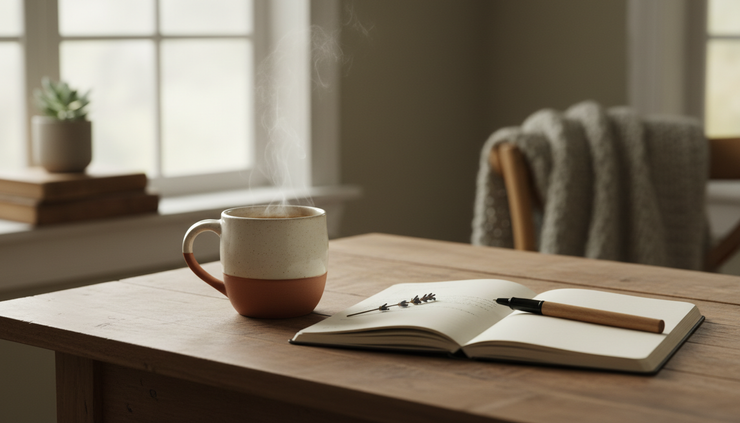
Give yourself permission to take up space
Creating space for yourself can sound selfish at first, especially if you are used to being available to everyone and everything. But space is not the same as distance. It is not shutting people out. It is making room inside your own day to notice what you need.
That space might be physical, emotional, or mental.
Physical space can be as simple as claiming one chair, one corner, one windowsill, or one side table as yours. It does not need to be styled perfectly. It only needs to feel welcoming. A blanket, a favorite mug, a candle, a plant, or a small stack of books can turn an ordinary spot into a soft landing place.
Emotional space means letting yourself feel what is actually there. Not fixing it right away. Not explaining it away. Just noticing.
Mental space often comes from reducing the noise for a few minutes. That might mean leaving your phone in another room while you drink coffee. It might mean driving without a podcast. It might mean folding laundry in silence instead of filling every gap with more input.
A helpful way to begin is to ask one simple question:
What would help me feel a little more like myself today?
The answer may be smaller than expected. Fresh sheets. A slow walk. Ten minutes in the sun. A meal that tastes like home. Watering plants. Clearing one messy surface.
Small things count because life is mostly made of small things. Waiting for a large break in your schedule can keep rest out of reach. Looking for tiny openings makes it easier to begin.
Try setting aside a small pocket of time that belongs only to you. It could be five minutes before everyone wakes up, ten minutes after lunch, or the quiet stretch before bed. Keep it realistic. If an hour feels impossible, do not start there.
Start with five minutes and protect them gently.
During that time, do not measure your worth by how much you get done. Let the space exist without needing to prove anything.
Let ordinary tasks become quiet rituals

A ritual does not need to be formal or complicated. It is simply something you do with care and attention. The same action can feel like a chore when rushed and like a reset when done slowly.
Making coffee is a good example. On a busy morning, it may be one more step before getting out the door. But when you slow down, it becomes sensory. The sound of water heating. The smell of coffee as it brews. The warmth of the mug in your hands. The first sip before the day becomes loud.
Cooking can work the same way. Chopping vegetables, stirring a sauce, kneading dough, or seasoning a simple meal can bring you back into your body. You do not have to make something impressive. A grilled cheese sandwich, scrambled eggs, roasted potatoes, or a bowl of pasta can still be grounding when you are present for it.

Gardening is another quiet way to reconnect. You do not need a backyard or raised beds. A basil plant on the counter, a pot of mint on the porch, or a few flowers by the front door can be enough. Plants ask for a steady kind of attention. Water. Light. Patience. They remind you that growth is often slow and still real.

These everyday rituals help because they give your mind one clear place to land. Instead of thinking about twenty things at once, you focus on one small action.
A few ordinary rituals to try:
Brew your morning coffee or tea without checking your phone.
Water your plants slowly and notice which leaves have changed.
Cook one simple meal without rushing through the steps.
Light a candle while you tidy the kitchen after dinner.
Take a shower and imagine the day rinsing off.
Open a window for a few minutes and breathe in fresh air.
The action itself matters less than the attention you bring to it.
If life feels especially full, choose something you already do and soften the way you do it. You do not have to add more to your list. You can change how you move through one thing already there.
Use creativity without pressure
Many people hear the word creativity and immediately think of talent. Painting, music, writing, design, or some finished thing that other people can admire. But creativity is much wider than that.
Creativity is arranging flowers in a jar. It is choosing colors for a room. It is pulling together dinner from what is left in the fridge. It is writing a sentence that tells the truth. It is moving furniture until a room feels better. It is making something more personal, more useful, or more alive.
You do not have to call yourself creative to make creative choices.
Decorating is a gentle place to start because it lets you respond to your surroundings. Maybe your home has started to feel more functional than comforting. Maybe every surface is holding mail, keys, laundry, or things waiting to be dealt with. You do not have to redo the whole space.
Pick one small area.
A bedside table. A bathroom shelf. The entryway. The corner where shoes pile up. Clear it, wipe it down, and add one thing that feels good to see. A small bowl. A framed photo. A lamp with warm light. A plant. A book you want to read.
That small change can send a message to your nervous system: someone lives here, and they deserve care.
Journaling can offer that same message in a different form. You do not need a beautiful notebook or a daily habit. You can write on scrap paper if that is what you have.
Try beginning with one of these lines:
Today I feel...
What I need but have not said is...
I miss...
I am grateful for...
One thing I can release today is...
Do not worry about grammar or style. No one needs to read it. The value is in letting your thoughts come out of hiding.

Creative self-care can also be playful. Try making a playlist for the season you are in. Bake cookies and share them with a neighbor. Press flowers in a book. Change the art on your wall. Doodle while you wait on hold. Take photos of small beautiful things during a walk.
The goal is not to become impressive. The goal is to feel engaged with your own life.
When creativity has no pressure attached, it becomes a way of listening. You notice what colors calm you, what smells comfort you, what music shifts your mood, what textures make a room feel softer, what ingredients make a meal taste like memory.
Those details matter. They are part of knowing yourself.
Rest without earning it first
One of the hardest parts of slowing down is believing you are allowed to rest before everything is finished. The problem is that everything is almost never finished. There is always another dish, another email, another load of laundry, another appointment to schedule.
If rest only comes after the list is complete, rest may never come.
This does not mean ignoring responsibilities. It means recognizing that you are a person, not a machine. You need pauses, not because you have failed to keep going, but because pauses are part of being well.
Relaxing with a warm cup of coffee can be enough. So can sitting outside for a few minutes. So can lying on the couch without making it productive. Not every quiet moment needs to become meditation, reading, exercise, or personal growth.

Sometimes rest is just rest.
If doing nothing feels uncomfortable, ease into it. Give your hands something soothing to hold. A mug, a blanket, a smooth stone, a warm bowl of soup. Let your body settle before asking your mind to be quiet.
You can also create a soft boundary around rest. For example:
I am taking ten minutes before I answer that message.
I am eating lunch away from the kitchen counter.
I am going to bed without finishing one more task.
I am stepping outside before I start the next chore.
These choices may seem small, but they help rebuild trust with yourself. Each time you pause, you remind yourself that your needs are real.
Rest can also look different depending on the day. On one day, it may be sleep. On another, it may be laughter. On another, it may be a walk around the block, a clean kitchen, a long bath, or a quiet drive.
Pay attention to the kind of tired you feel.
If your body is tired, you may need stillness. If your mind is tired, you may need simplicity. If your heart is tired, you may need comfort. If your spirit feels dull, you may need beauty, play, or time outside.
Slowing down becomes easier when you stop treating every form of tiredness the same.
Build small pauses into real life
A calmer life is not built only through big decisions. It is often shaped by repeated pauses that help you come back to yourself.
Think of these pauses as tiny doorways. They do not take you away from your life. They bring you more fully into it.
You can place them between ordinary moments:
Before getting out of the car, take three slow breaths.
Before opening your inbox, stretch your shoulders.
Before starting dinner, play one song you love.
Before going to bed, write down one thing that felt good.
Before saying yes, give yourself time to check in.
The pause does not have to be visible to anyone else. It can be private and quiet. A hand on your chest. A slow inhale. A sip of water. A moment near a window.
These small pauses are especially helpful during transitions. Moving from work to home. From caregiving to rest. From errands to dinner. From noise to sleep. Without a pause, the day can blur together. With a pause, even a short one, your mind gets a signal that you are entering a new part of the day.
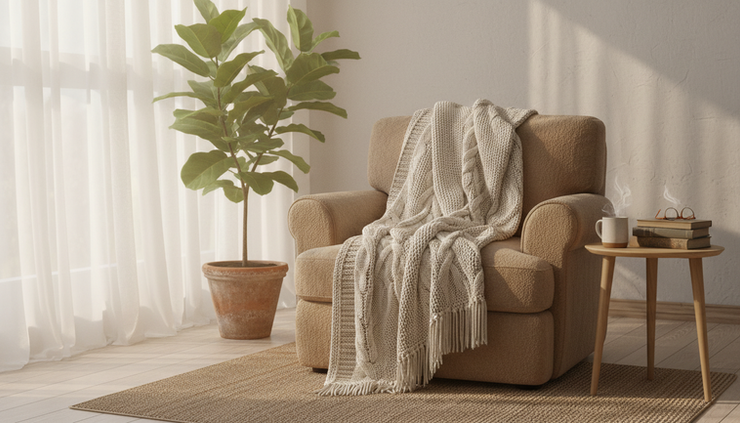
It may help to create a short list of practices that reliably bring you back to yourself. Keep it simple enough that you can use it when you feel scattered.
Your list might include:
Make coffee and sit for five minutes.
Step outside and feel the air.
Water the plants.
Write one page without editing it.
Put fresh sheets on the bed.
Cook something warm.
Clear one small surface.
Listen to soft music while doing nothing else.
Keep the list somewhere visible. When you feel disconnected, you will not have to think too hard. You can choose one thing and begin there.
The beauty of small practices is that they meet you where you are. They do not require a new identity, a perfect schedule, or a major life change. They only ask for a little honesty and a little attention.
Come back to yourself gently
Slowing down is not about escaping your life. It is about creating enough space inside it to hear yourself again.
Some seasons will allow long mornings, creative projects, and slow meals. Other seasons will only allow a few quiet sips of coffee before the day begins. Both can be meaningful. Both can count.
Start with what feels possible. Choose one small practice that feels kind, not demanding. Tend a plant. Make a simple meal. Move a lamp to a better spot. Write what you cannot say out loud. Sit quietly with something warm in your hands.
You do not need to earn your own care. You do not need to make it beautiful enough for anyone else to understand. You only need to return, again and again, to the small things that help you feel present, steady, and at home in yourself.


Comments